December 4, 2025 · 4 min read
The Composer Credit Problem on Streaming Platforms
A score reaches millions while its author goes unlisted on the app. We trace where composer credits break upstream, and what a careful studio fixes first.
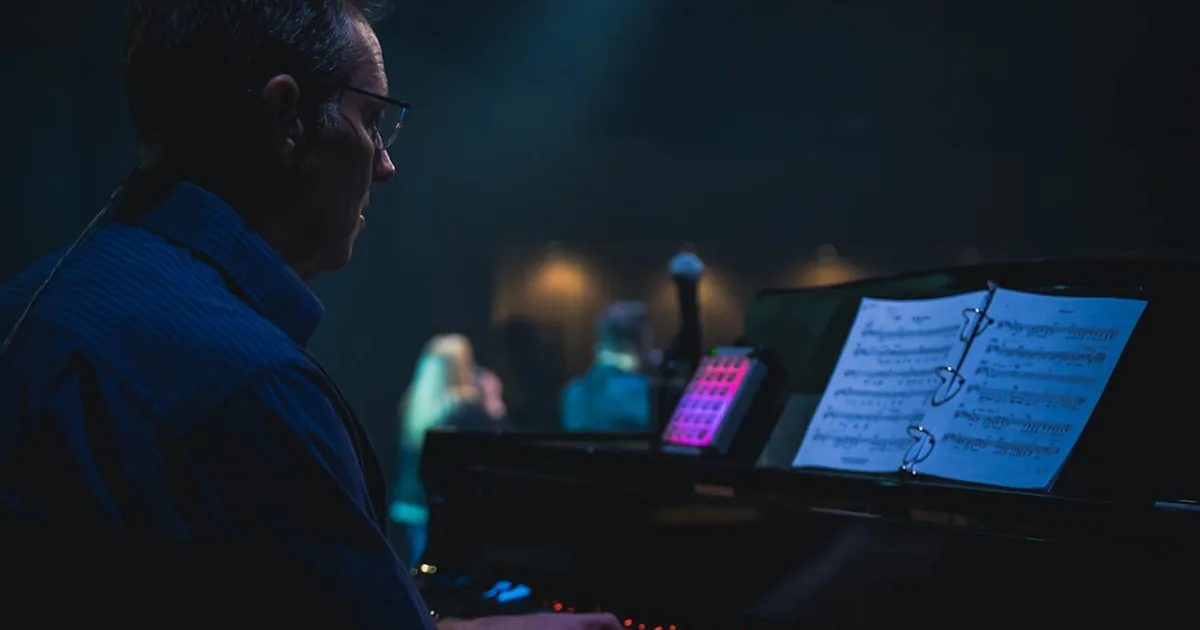
A score can play for ten million people in a single weekend and the person who wrote it appears nowhere a listener can see. The film travels, the cue does its work under a scene, the stream count climbs — and the composer's name stops at the edge of the screen, if it gets that far. We deliver music into films for a living, and we have watched the same thing happen often enough that we no longer call it an accident.
The composer credit problem on streaming platforms is usually described as a matter of respect, and it is. But framed only that way it sounds soft, like an oversight a polite email could fix. It's harder than that. A missing credit is a data failure with a career-shaped consequence, and the data tends to fail in places most people never look — not on the platform, but upstream, in the quiet handoffs that carry a name from a spotting session to a server.
Where the credit actually breaks
The instinct is to blame the platform, to assume a service simply chooses not to show who wrote the music. It happens. But it's rarely the first failure. More often the name never arrives in a form the platform could display even if it wanted to.
Discoverability has always been a metadata question. A cue is found by the data attached to it, not by how good it is; Sound on Sound made the point years ago — a piece of music, however well composed and recorded, does nothing but gather dust if it is not properly configured. The same logic governs a credit. If the writer field is empty when the recording leaves the building, no downstream system invents it.
Trace the chain and the leaks are obvious. The spotting session sets which cues exist. The cue sheet records who wrote them. Delivery bundles the audio with its metadata. A distributor or aggregator passes that bundle to the streaming service. Every one of those handoffs is a place where the composer field can be dropped, truncated, or overwritten with a catalog default. By the time a name is missing in the app, it usually went missing three steps earlier.
Some services carry credits further than others — a few surface full contributor lists, others still stop at performer and title. But even the most willing platform can only display what the metadata carried in. The interface is the last link in the chain, not the broken one.
Credit and payment are the same question
It's tempting to treat the credit as a courtesy and the royalty as the real business. They are the same fact seen from two sides. A name that is missing from the credits is also a name that is hard to pay.
The imbalance is already steep. By one widely cited analysis, the publishing and songwriting side earns roughly a third of what recorded-music rights holders take from streaming — and the people whose names are hardest to surface in an interface tend to sit furthest down that payment waterfall. Authorship that is invisible in the credits is easy to underpay, because there is no visible party to account to.
The structural version of this fight is not new. Years ago, close to ninety composers and songwriters gathered in Budapest over streaming services pressing them toward buy-outs — deals that trade a composer's standing as a named, royalty-bearing author for an up-front fee. When the rights chain is restructured, the credit and the income weaken together, even as the music reaches an audience of millions. Recognition and compensation are not separate problems with a shared symptom. They are one authorship question wearing two faces.
What we check before delivery
We do not control the platform. We control the upstream end, and that is where the credit is won or lost. So we have stopped treating the cue sheet and the metadata handoff as paperwork that happens after the work, and started treating them as part of the deliverable.
At picture lock we settle the things that travel: exact cue titles, writer splits, and the identifiers — IPI for the writer, ISWC for the work — wherever they exist. Those values go into the delivery package verbatim, not retyped from memory at the last minute. We carry them into the M&E and sync documentation so that whoever handles distribution inherits a complete field rather than a blank one to guess at.
The reason is plain, and a little unsentimental. A credit is the practical address by which the next commission finds a composer; as Sound on Sound has noted of album credits, without somewhere to aggregate that information, the career-building connections it once made simply cannot get made. The Recording Academy's Producers & Engineers Wing has pushed for comprehensive crediting on digital distribution for years, with mixed results. We aren't waiting for that work to finish before doing our part of it.
A working note
The fix isn't glamorous. It is a checklist item: confirm the writer fields are populated and correct before anything leaves for delivery, then confirm they survived the handoff after. We give the data that travels with a final mix the same attention we give the mix itself — because the sound outlives the project, and the name should travel with the sound. More of how we think about this work lives in the journal.
Keep reading
More from the journal →