September 8, 2025 · 4 min read
The Pricing of Original Score in 2026
What an original score costs an independent feature in 2026, what a package fee actually pays for, and why the number on a composer's quote rewards patience.
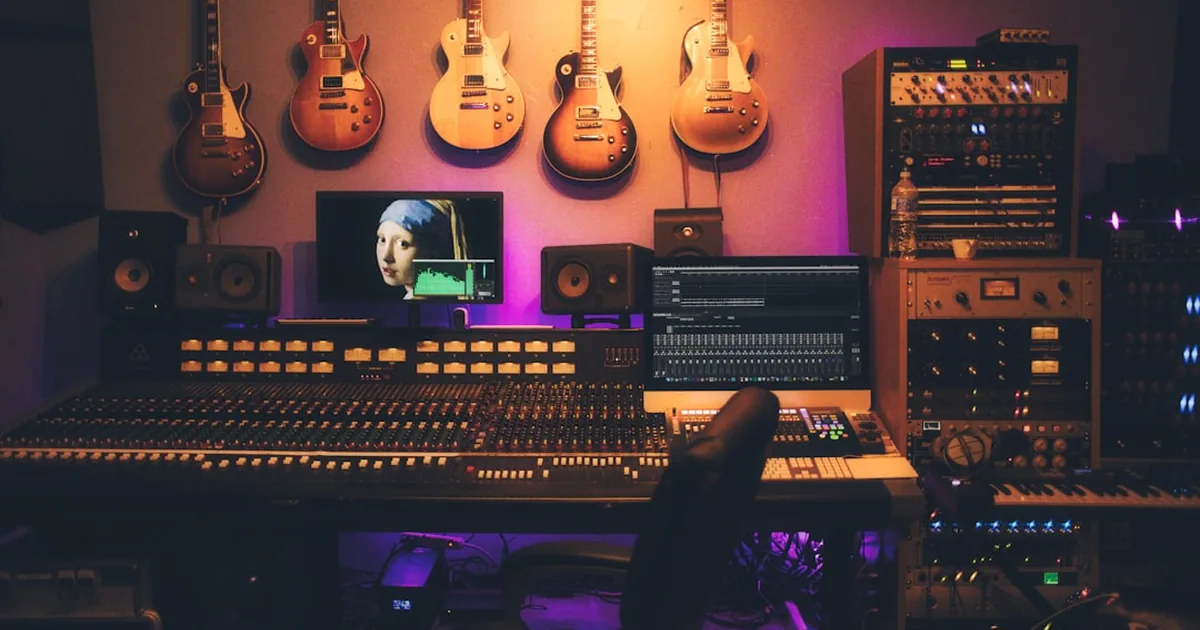
A composer's quote lands in the inbox as a single number, and that number does more work than almost any other line in an independent film's post budget. It has to pay a person for months of writing, cover the players and the room they record in, and quietly settle the question of who owns the music once the festival run is over. For a feature finishing this year, that number usually falls between a few thousand dollars and the low five figures — and the spread inside that range says more about how a film is made than about how good its score will be.
We spend a fair amount of time on the phone explaining what sits underneath the figure. So here is the version we wish every director had before the spotting session, and the kind of note we keep returning to in our journal: what an original score actually costs in 2026, and what the cost is made of.
What the number on the quote actually covers
When a composer sends a package fee, they are not pricing their own hours alone. A package — sometimes called an all-in, or a buyout when rights travel with it — folds the writing fee, the musicians, the studio time, the music prep, and the mix into one figure the composer then spends down. If the strings run long, or a cue gets rewritten after picture lock, the overage comes out of that same pot rather than the production's. That structure is why an $8,000 package and a $25,000 package can both be honest prices for the same length of film: one assumes a laptop, a few live overdubs, and the composer mixing at home; the other assumes a small ensemble, a real room, and an engineer.
For an independent feature, the entry end still sits around $1,500 to $5,000 for a festival-ready score, with more experienced composers on indie work landing in the $5,000 to $10,000 band, and larger indie productions climbing past that. A rough planning figure many of us still reach for is two percent of the production budget set aside for music, rising toward five to ten percent only once a film can afford a scoring stage.
The per-minute habit, and why we mostly let it go
For years the trade priced scores by the finished minute — roughly $200 to $250 a minute at the workmanlike end, more for a name — which made a fifty-minute score pencil out somewhere near $10,000 to $15,000. The math is tidy, and we understand why budgets reach for it.
The trouble is that a minute of music is not a unit of work. A held drone under a two-minute dialogue scene and a fully orchestrated ninety-second chase both read as a minute on the spreadsheet, and they are not remotely the same job. We quote against the spotting session now — the cue count, the instrumentation, how many revisions live inside the fee — and treat per-minute figures as a sanity check rather than a contract. A director handed only the per-minute number tends to over-order music, then wonder later why the cut feels scored end to end.
What a score is quietly competing against
The other reason the original-score figure deserves patience is what it stands in for. A recognizable song carries two rights — the master and the publishing — and each side is negotiated separately, with every songwriter on the cue free to decline. As IndieWire's filmmaker guide to music licensing lays out, festival clearances on a modest track can start near $500 per side and climb steeply the moment the song is well known or the release widens past festivals. It is the reason so many features reach picture lock married to a temp track they can never afford to keep.
Against that, a commissioned score is a fixed, ownable asset. The film controls it across every window, no third party can pull it, and — as Filmmaker Magazine has argued about producers holding their own publishing — the rights themselves can become a small, durable line of value rather than a recurring cost. For a film that means to travel, the original score is often the cheaper decision across the life of the title, not the more expensive one.
A short working note for 2026
What has shifted this year is less the rate card than the pressure around it. Indie budgets are tighter, buyouts are asked for earlier, and library and generative tools are pitched as a way to skip the commission altogether. We have watched a handful of films take that road and arrive at the mix with music that fits the frame and means nothing. The figure on a composer's quote is, in the end, the price of a score that belongs to this picture and to no other — written for these scenes, owned by this film, and able to carry the title long after the festival lights go down. That is the part of the music we are least willing to discount.
Keep reading
More from the journal →