October 17, 2026 · 4 min read
Running a Mix Approval Across Three Time Zones
Our spotting pieces assume everyone is in the room. A remote mix approval does not, and three time zones make it a record-keeping problem as much as a sound one.
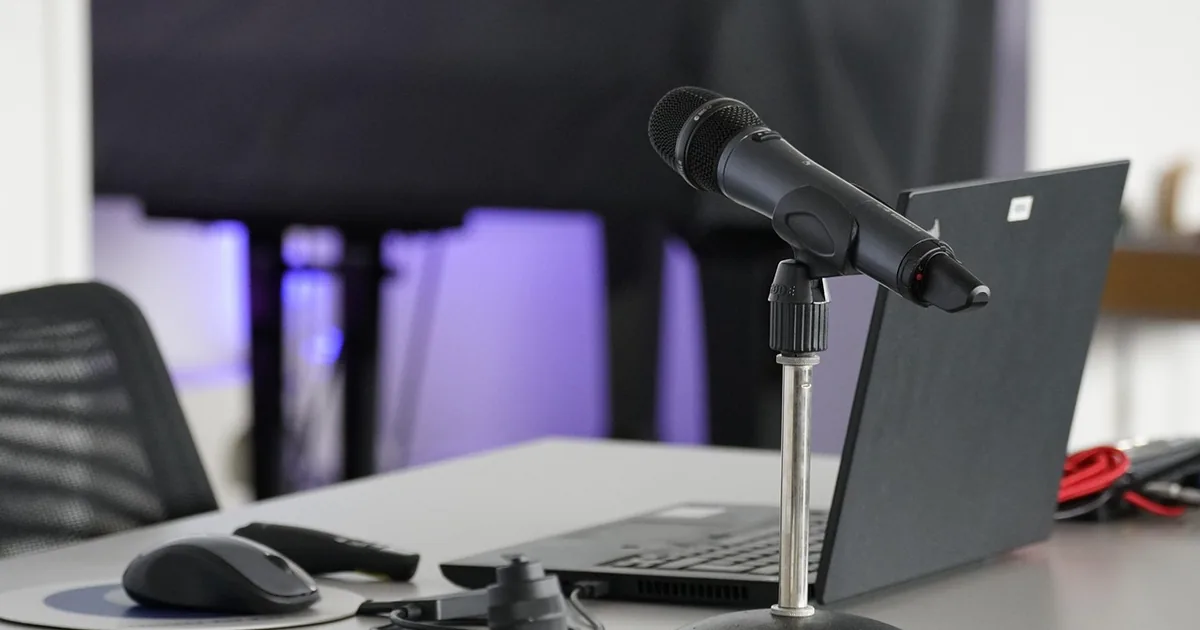
Everything we have written about spotting sessions assumes the people who decide are in the same room, hearing the same speakers at the same moment. A remote approval takes the room away. We lose control of what the client hears, and the decision has to come out of a stream and a chat window. Put the director, the producer and the distributor's representative in three time zones and the approval stops being only a sound problem. It becomes a scheduling problem and a record-keeping problem too.
What follows is how we think about it. Other studios run it differently.
Find out what the client hears
Before anything is played, ask what each approver is listening on. Speakers, headphones, a television, a laptop: the answer changes what a note means. A complaint about thin dialogue may be a complaint about a playback chain we have never heard.
The tools help only up to a point. Production Expert's look at a cloud screening room makes the useful distinction that clients should hear what they are actually getting rather than what the platform is doing, and names a stereo fold-down as the minimum for multichannel work. Smooth picture and good audio are the baseline, not a bonus.
Our own side matters as much. John Harris, who mixes remotely, puts the goal plainly: as long as he knows what he hears is what other people will hear, he can stop worrying about the equipment. He also uses closed-back headphones as a check on the low end. Translation confidence on our end is what lets us read a client's note as a note about the mix and not about their room.
Notes arrive consolidated
An open call with six people each voicing a preference is the worst way to run a remote session. Re-recording mixer Karol Urban describes the fix in her interview with Sohonet: clients decide in advance who needs to attend, creative teams consolidate and discuss notes beforehand, and people rank their notes by priority. Her result is fewer conflicting notes to resolve and more time spent on the mix itself.
Two habits sit next to that. Keep the talkback to the mixers separate from the channel where notes are given, so nobody talks over a playback. And have someone other than the mixer watching the stream. In the same account, a technician supervises each session and a viewer with a problem is often sent a fresh link before the client notices. Nobody should find out forty minutes in that one approver has been hearing a dropout.
How many passes the notes take is its own question, and we have written about how many rounds of notes a film actually needs. Remote work raises the cost of every extra round.
Where the time zones bite
The real cost of three time zones: someone is always at the edge of their day. One of the three approvers hears the mix at the end of a long evening or the start of a short morning, and ears behave accordingly. We plan a mix day around the limits of hearing, as we describe in how we schedule a mix day around the limits of ears, and a shared live session across three zones cuts against that.
So the first decision is who has the deciding voice. If one approver can sign off for the others, the session can be shaped around that person's hours, and the rest review with time-stamped notes. If all three must agree, expect more than one session, and expect the day rate to reflect it. We lay out what a day on the mix stage costs elsewhere, and a mix stage held open for a late call is a real line item.
Frame-accurate markers earn their place here. Tools such as MixStage let participants drop, edit and export time-stamped markers and comments together, which means an approver who could not attend live can respond to the same moment in the picture as everyone else.
Writing the decision down
A stream does not produce a decision on its own. At the end of the session we write down what was approved, against which named version, by whom, and what is still open. That note goes to every approver, including the ones who were asleep.
The sources we found describe the review tools well. None of them describes a formal sign-off, so that part is ours to build, and we'd rather build it in plain language than lean on a platform's comment export. For a film that rests on its sound, the version everyone agreed to should be a sentence anyone can find later.
Keep reading
More from the journal →