October 8, 2026 · 4 min read
The Case Against Temp Music
A temp track is borrowed music that stands in for a score that doesn't exist yet. It also decides the rhythm of the cut and the shape of the composer's brief. Here is why we discourage temp in the edit, what it costs a score, and what we reach for instead.
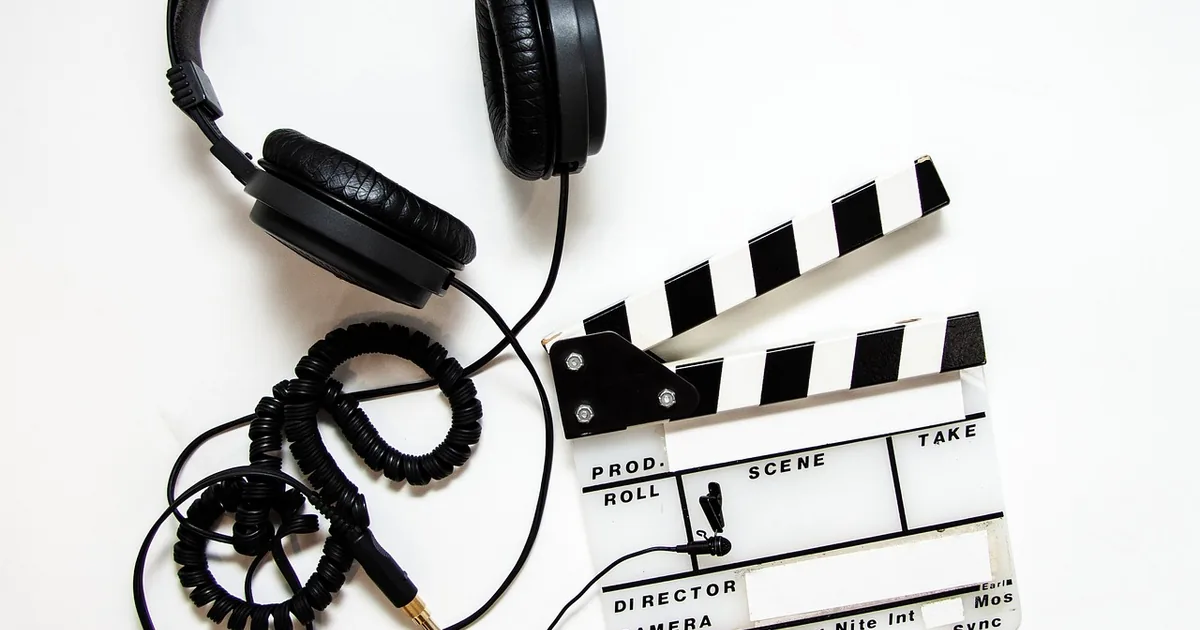
We discourage temp tracks in the edit. Not a ban, since there are cuts where a reference is the fastest way to say something, but a default: the first assembly goes in without borrowed music, and anything borrowed has to earn its place.
A temp is existing published music standing in while the real score gets made. The editor lays it under a scene, the director hears the scene working, and everyone moves on. The trouble is that a temp doesn't stay a placeholder. It becomes the first version of the film's music, and everything after it is measured against that first version.
That is the temp music problem in film, and it is less about taste than about order of operations. The music gets decided before anyone who writes music is in the room.
Why a temp track sticks
Once picture and music are working together, even a small change upsets the balance. Sound On Sound's Paul Farrer puts the composer's side of this bluntly: the hardest thing a media composer does is match and replace a temp score.
It gets worse with time. In Farrer's words, "the longer a temp track gets kicked around the production office, used on promotional clips, previews and pilot episodes, the more profoundly it gets ingrained in the entire production team's idea of what the show is trying to be about." He is writing about television, but a feature cut passes through the same rooms: the producers' screening, the sales reel, the festival submission link. By picture lock, the temp has been heard fifty times by people who will be asked to approve something that replaces it.
Editors know this part and rarely say it out loud. Cut points, pacing, the length of a held shot, where a scene is allowed to breathe: all of it gets tuned to the rhythm of the music underneath. Pull the temp out and the cut can feel wrong, not because the scene is wrong but because it was built around someone else's tempo.
What it does to the brief
A composer handed a cut with a temp isn't really handed a blank page. They are handed an answer and asked to produce something close to it that isn't it. Farrer describes the squeeze: the replacement has to compete with reference music made on far larger budgets while avoiding the trap of sounding like a soundalike parody.
The extreme version is well documented. Stanley Kubrick used existing recordings, among them works by György Ligeti, as temp for 2001: A Space Odyssey, then kept them and dropped the score Alex North had written, as the film score overview on Wikipedia records. The same page lists other productions where a commissioned score went unused after the temp stuck. Most cases are quieter than that: a composer who nudges a cue toward the reference a little more each round, because that is the version that gets approved.
The pressure is familiar at smaller scale too. We wrote about it in our note on composer-matching competitions, where the brief is often a reference track by another name.
What we do instead
Three habits. None of them complicated.
Cut dry first. The first assembly goes together with production sound and room tone, nothing borrowed. It's uncomfortable for a day. Then you learn which scenes actually need music and which only felt like they did.
Get the composer in early. Farrer's advice is to be there from the start and offer your own temp tracks the moment you know the job. We would go a step further and ask for sketches: a few bars of an idea, a palette of instruments, a rough pulse. A scratch cue written for the film can be revised. A borrowed one can only be matched.
Use a reference as a conversation, not a brief. Sometimes a piece of existing music is the quickest route to explaining an emotion that words won't carry. Fine. Play it in the room, talk about what it does (tempo, register, what's missing, what's too much), then take it out of the timeline before it travels. If it never goes under picture, it never gets approved.
There's a side benefit further down the line. A cut that hasn't been tuned to borrowed music tends to need fewer rounds of notes in the back half, because there is one less fixed point nobody can move.
A working note
On the next cut, try one scene dry. Pick the one you were most sure needed music, watch it with room tone only, and write down what you notice before you reach for a reference. If it still wants music, tell the composer what it wants it to do rather than what it should sound like. That sentence is the start of a score, and a score has a longer life than a placeholder does: see what happens to a score after the festival run.
Keep reading
More from the journal →