September 23, 2026 · 3 min read
Training an Assistant Editor When You Don't Have a Pipeline
There's no dailies facility here, no inherited codebook, no department to shadow. What a new assistant editor actually learns at a shop this size comes from proximity, not process — and that turns out to be the harder, better teacher.
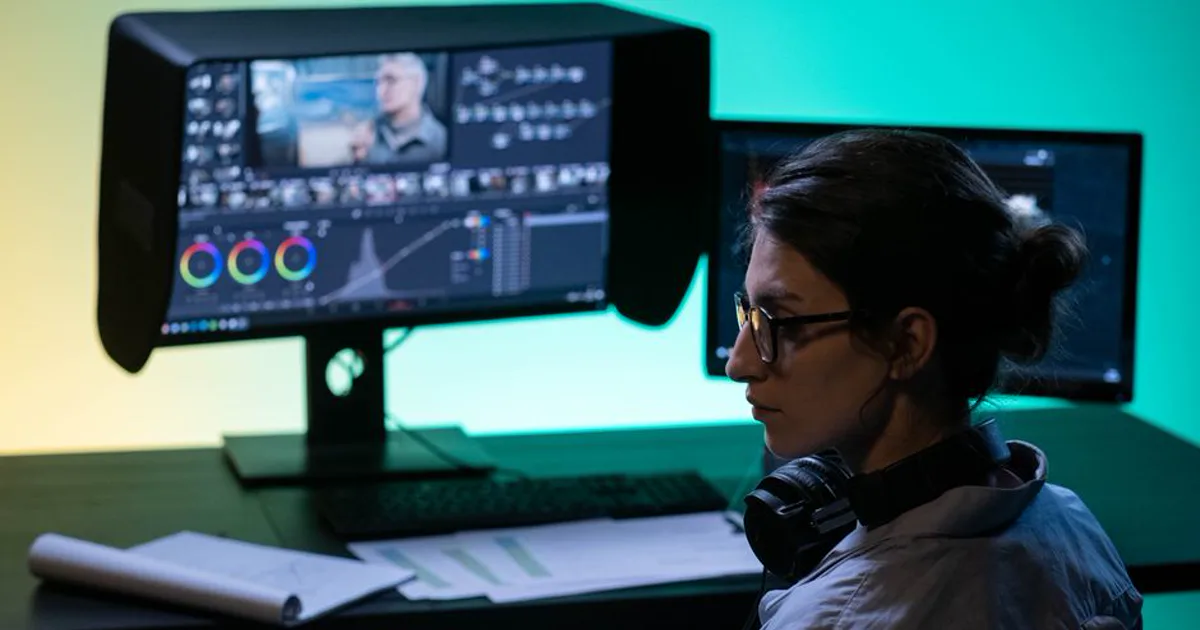
The Job We're Actually Hiring For
A studio with a real pipeline hands a new assistant editor a codebook, a dailies facility, a department to shadow. We don't have any of that. What we have is a small cutting room, a handful of projects running at once across film, music, and sound, and an editor who needs someone reliable enough to hand things to. At that scale the assistant editor role strips down to two things: technical infrastructure, and proximity to decisions. The org chart, the training manual, the formal rotation through departments — that's a fiction anyway once you're small enough that everyone touches everything.
So the question we keep coming back to isn't how to build a training pipeline. It's what we've actually learned training assistants without one.
There Is No Standard Curriculum
This isn't a disadvantage unique to us. Even at studios with real infrastructure, an assistant editor's responsibilities shift considerably from project to project, and there's no standardized curriculum — assistants learn by doing, picking up software proficiency, workflow management, and problem-solving inside whatever the current production actually requires. A fixed pipeline doesn't erase that variability. It just hides it behind a job title.
At our scale, the variability is just harder to miss. An assistant here might spend a morning syncing dailies for a documentary, an afternoon prepping stems for a mix session, then sit in on a spotting conversation for a score the next day. The range is the training. Nobody hands you a manual for it, because the manual would be different every week.
What the Session Itself Teaches
The real education doesn't happen at the workstation. It happens in the room. The most transformative learning comes from sitting in on the sessions where an editor receives and processes notes from directors and producers — watching what gets pushed back on, what gets absorbed without argument, why. An assistant who's only ever cut alone at a station has learned software. One who's sat through a dozen of those conversations has started to learn editing.
We run the three-pass method on nearly every cut, and it's a good example of something you can't teach just by describing it. You can explain the three passes in a sentence. You can't explain why the second pass feels different from the first until you've watched someone run it against a scene that isn't working yet. That's not a knock on documentation. It's just an honest account of where the knowledge actually lives.
Building the System as You Go
Without a dedicated dailies facility, an assistant has to manually sync camera angles, manage asset organization, and troubleshoot technical problems independently rather than inherit a tested system someone else built. That's slower in the first month. It's also why our assistants tend to understand why a naming convention or a take-log format exists, instead of just following one they were handed.
We ask a new assistant to own take logs, script notes, and continuity early — not because it's the interesting part of the job, but because that's where precision is the whole craft. Matching five takes in the script supervisor's notes to five takes in the edit system sounds clerical until the day it isn't. The assistant who's owned that discipline since week one is the one who catches the discrepancy before it reaches the mix stage.
The Working Note
A pipeline isn't a prerequisite for training an editor. Proximity to real decisions is. We'd rather put a new assistant in the room for a hard note session than run them through a manual that describes one — every assistant who's come through here so far has confirmed that trade-off was the right one.
It's the same principle behind how we run a spotting session with a director on the music side — the room teaches, if you're actually in it. A pipeline can standardize the paperwork. It can't substitute for being present when the decision gets made.
Keep reading
More from the journal →