July 10, 2026 · 3 min read
Why We Keep a Separate Dialogue Session at the Mix
Dialogue doesn't get folded into the general mix session. It gets its own track, its own predub, and its own pass — because fixing intelligibility and rebalancing a stem are two different jobs, and mixing dialogue on the fly under stage pressure is how both get done badly.
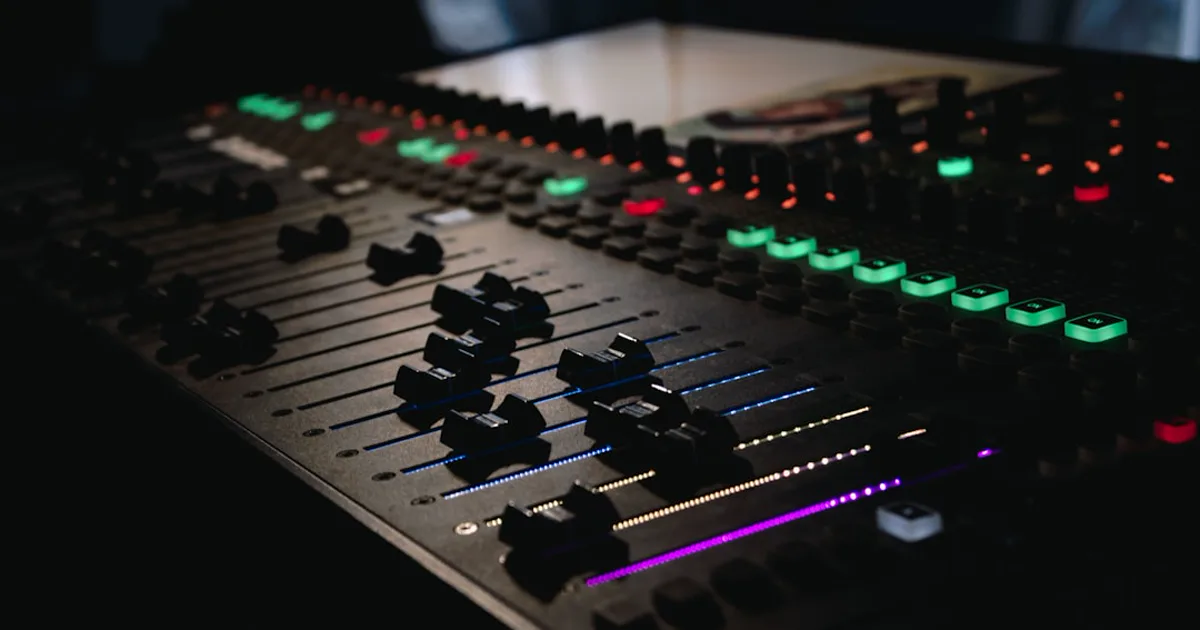
Every finished mix is built from three divisions of sound — dialogue, effects, and music — and we don't let dialogue ride inside the same session as the other two. It gets its own track, its own predub, and its own pass at the desk before it ever meets the rest of the stems on the stage. That separation isn't a workflow habit we picked up and never questioned; it's what keeps a mix fixable instead of just finished.
The reason starts with what production dialogue is when it lands: usable, but never uniform. Backgrounds shift from take to take, mic distance drifts, a line recorded at 9 a.m. sits next to one from a pickup shot two weeks later. Dialogue editing is closer to fixing an existing sonic world than building a new one — smoothing those transitions so a listener never clocks the cut between shots. Effects and music editing start from close to nothing and construct outward. Dialogue starts from something that already exists and has to be wrangled into consistency. Those are different jobs. Running them through the same session blurs the line between "problem we're solving" and "material we're building."
What the Dialogue Session Isolates
A dialogue session holds production sound, ADR, and walla — nothing from the effects or foley chain, nothing from score. Keeping it that narrow is what makes predubbing possible: all the dialogue tracks get mixed as a group into an intermediate master before the final dub, the same way all the Foley tracks get grouped separately. Solve the intelligibility problems once, in the predub, with room to listen — not on the stage, under the clock, with a director in the room.
ADR lives here too, not in the effects pass. A replaced line has to match the cadence and presence of the production take sitting next to it, which is a dialogue-editing judgment call, not a sound-design one. We treat spotting the need for ADR the same deliberate way we treat running a music spotting session with a director — a decision made early, in its own room, so it doesn't get made twice.
Why the Stem Stays Addressable
The payoff shows up later, at the stage. Once dialogue is its own stem, a mixer can pull it up half a dB, tuck a sibilant, or ride a line without touching a fader that's already correct for the score or the effects bed. Keeping dialogue addressable as its own stem protects the balance already dialed into everything else — you're rebalancing one category, not renegotiating the whole mix. The distinction runs institutional too: MPSE gives Feature Dialogue/ADR its own Golden Reel category, separate from effects, foley, and music.
What We Noticed When It Wasn't
We've sat in on a mix where a background bed shifted mid-scene because two dialogue passes had been folded into one session too early. Untangling it on the stage cost more time than a clean predub would have. Even mixing setups built for remote work during the pandemic kept this instinct intact — editorial, Foley, and design still got parsed out as separate workstreams before reassembly, even when the mixers weren't in the same room, let alone the same session.
None of this is bureaucracy. It's what makes a mix note-able — a director can ask for a dialogue-only pass without reopening the whole session, and a mixer can hand off a stem that still behaves the way it did when it left the predub. It's the same discipline that shows up everywhere sound touches a picture at Stillfield: isolate the problem before you try to solve it in front of an audience.
Keep reading
More from the journal →