October 6, 2026 · 3 min read
A Note on Lens Choice for Interviews
We used to swap lenses through an interview day without thinking much about it, one for a close-up and another for a wider cutaway. Cutting the footage together is what changed our mind. Now it's one fast, longer prime for most sit-downs, a second lens kept for a deliberate exception rather than habit, and a practice of moving the camera's position instead of zooming to reframe mid-conversation.
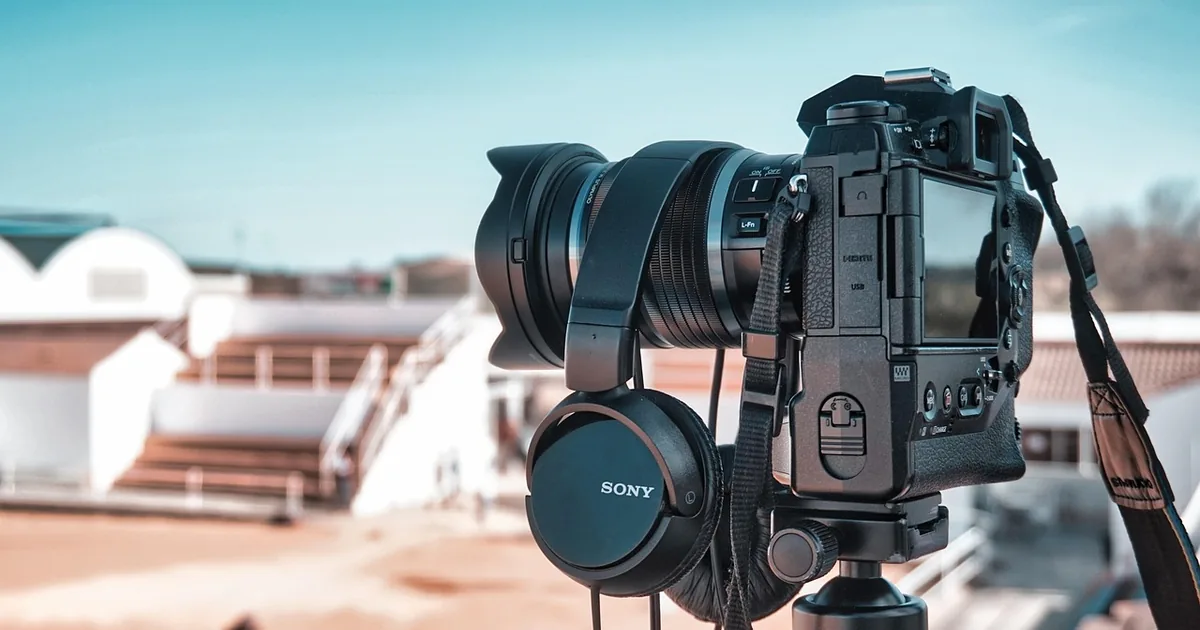
Most of our interview setups get shot on one focal length for the whole sit-down — not a kit we swap through between questions. Lately that's meant a longer, fast prime, somewhere in the 75-85mm range, wide open or close to it, rather than the 35mm or 50mm we'd reach for on a wider shot. Call it a decision, not a default, the same way we've argued about aspect ratio elsewhere. No single lens is objectively correct for every subject. But choosing one in advance, and holding to it, changes what the footage looks like once it's time to cut. We landed here after a run of interview days where the lens kept changing and the sequence never quite felt like one film.
What We Noticed
Cutting between subjects shot on different focal lengths breaks the rhythm of a sequence in a way an audience feels before they can name it. Compression and background falloff shift even when the framing on screen looks more or less the same. A close-up on a 35mm reads differently than the same size close-up on an 85mm, long before anyone registers that the lens changed. Wider glass held close to a face introduces a distortion too — one a subject clocks in the edit bay faster than we do on set. It reads as unflattering in a way that has nothing to do with lighting or performance.
This isn't particular to our own kit. Documentary cinematographers surveyed around festival premieres describe standardizing focal length across a shoot specifically to avoid this, and to keep a film from feeling like scattered footage once multiple operators, days, or locations get cut together. The lesson wasn't "pick a better lens." It was to stop treating the choice as incidental.
What We Kept
We've settled on a longer, fast prime for most sit-downs. The compression flatters a face, and a shallow depth of field does the work of isolating a subject from whatever's behind them — which matters more on location than in a controlled studio. One documentary cinematographer's choice of a fast 85mm for close interview framing, shot wide open for an isolated, elegant rendering of a subject's face, is the same instinct at a different scale. Cinematographers who commit to a single focal length across an entire production put it plainly: fewer variables on set leaves only the decisions that actually matter — performance, blocking, how a subject sits in the room — not which lens to reach for next.
The practical change on our end is smaller, but just as deliberate. When we need a tighter or wider frame mid-interview, we move the camera's physical position instead of zooming — the same instinct behind what we reach for first on a small shoot before we're ever on set. It keeps the lens's character, its compression and its falloff, constant no matter the frame size.
We still carry a second lens. It comes out for an establishing two-shot, or when a location genuinely needs the wider air around a subject — and that's the only time it comes out. A deliberate break from the rule, not drift away from it. The same instinct runs through the music and sound side of the studio: fewer choices, made earlier and on purpose, leave more room for the thing actually being recorded.
Keep reading
More from the journal →