November 13, 2026 · 3 min read
When Ambisonic Location Sound Earns Its Place
A shotgun mic points away from the room on purpose. Ambisonic capture is what we consider when the room is the subject, and a short test tells you whether it will pay off.
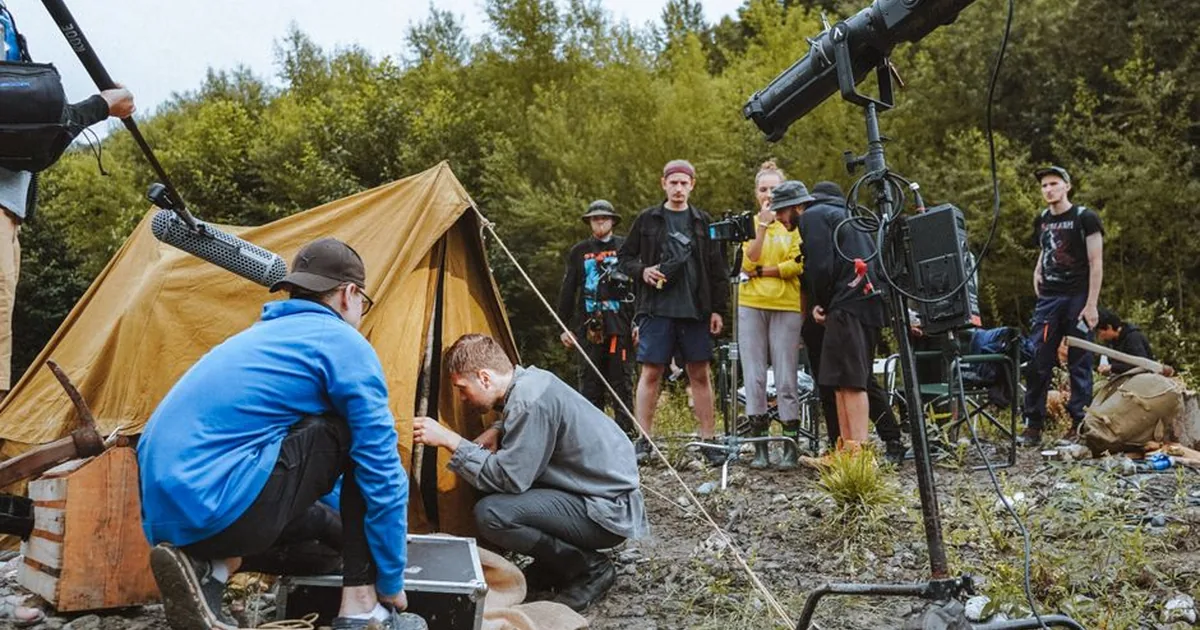
A shotgun mic points away from the room on purpose. For dialogue that is the right call, and it is what we reach for on most scenes. Ambisonic location sound recording is the exception, and it earns its place when the film needs to carry the place itself and not only the person speaking in it. The question we ask is simple: if this room sounded generic, would the scene lose something?
What it gives you in the mix
Ambisonics is a capture format as well as a replay format. A first-order recording is four channels: W for the omnidirectional component, and X, Y and Z for direction along each axis, as Sound On Sound explains in its introduction to immersive audio. The same piece points out that a raw ambisonic signal cannot be played back directly. It is an abstract description of the soundfield. You decode it for a speaker layout, or run it through a binaural encoder for headphones.
That decode step is the useful part for post. One recording of a street or a market can feed a theatrical mix and a headphone mix, and the call gets made at the mix, not on the day. It also means the capture can sit under a conventional recording without forcing a decision about delivery format on set.
There is a creative argument too. Steve Whitford's 2022 paper in The Soundtrack, The "Truth of Sound", proposes ambisonic location recording as a way to renew realist and unscripted filmmaking, because immersive audio can convey the geographical place and the physical event. It is an argument from the abstract, not a listening test with audiences, so read it as a reason to experiment and not as proof. Still, it matches what we notice in the room: a real soundfield narrows how much has to be invented later, which is the same line we draw in where atmosphere ends and invention begins.
Where it does not earn its place
Dialogue is the first one. The person talking still needs a boom or a lavalier on them. The ambisonic mic is there for the room, running alongside the main recording and never replacing it.
Precision is the second. The same Sound On Sound article is frank about the limits: even at second and third order, localisation is relatively limited, direction comes only from level and tone differences, and it is hard to make a single element leap out. First order is the coarsest of these. If a scene depends on one sound landing at an exact point in the surround field, you will end up building that in the mix anyway.
Then there's workflow: more channels, a decode step, monitoring you can trust, and a mixer who will actually use the material. If the film is going out in stereo only and nobody will ever decode the capture, you carried a mic and a recorder channel count for nothing. We would also check what the bag can hold before promising it: our own list is in what we pack for a documentary shoot.
A small test before the shoot
Record the location both ways for a minute, shotgun and ambisonic, then listen through a binaural decode on headphones and again in the room where you will mix. If the ambisonic version tells you something the shotgun does not, such as where the traffic sits or how far away the room opens up, it is worth carrying. If the two sound alike once you have taken the dialogue out, leave it.
Plan for failure too. In an interview about the documentary 32 Sounds, sound designer Mark Mangini described how most documentaries record sync sound on a single mono shotgun, and how that production arranged binaural and ambisonic recording shoots so the immersive audio came from the location and not from post. He is just as open that the recordings failed on one driving sequence. Treat the ambisonic mic as an extra, run the backup recorder we keep on the main recording, and never let the new mic be the only copy of the scene.
A working note
Pick one scene in the schedule where the place carries the story and record it both ways. Keep the rest of the shoot on the mic you trust. That's how we start with any new tool in sound: one scene, a fair comparison, and a decision made at the mix, not in the bag.
Keep reading
More from the journal →