July 20, 2026 · 3 min read
Working with a Band That's Never Been Filmed
The first time a band stands in front of a camera, the tell is in how they hold their instruments. A field note on what we've learned about closing the gap between a good take and a good shot on a first shoot.
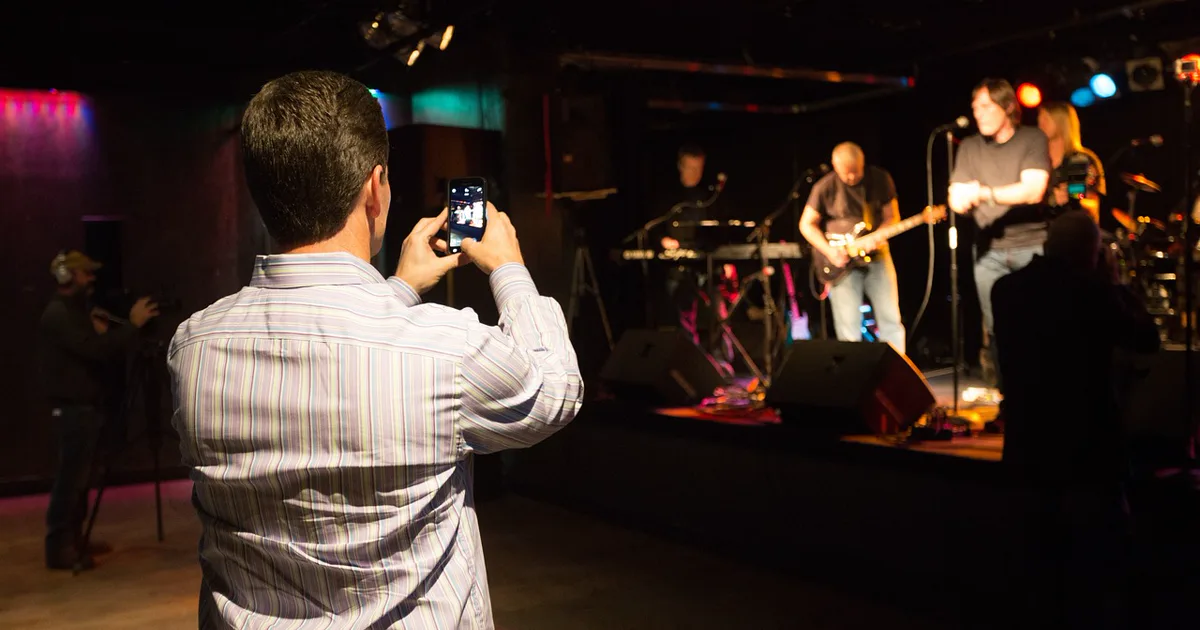
You can tell inside the first ten minutes whether a band has stood in front of a camera before. Not from how they play — from how they hold their instruments once the lens is pointed at them. A guitarist used to a stage angles toward the crowd out of habit. A drummer who's never been shot close-up starts watching the monitor instead of the room. None of it is wrong, exactly. It's just new, and the gap between a good take and a good shot rarely closes on its own on a first shoot.
That gap is the actual problem to solve, not the gear or the schedule. Here's what we've noticed about it, and what we've changed — and kept — in how we run the first hour of a shoot day with a band that's new to this.
What We Noticed
The tension shows up almost every time: the music is great and it looks stiff, or the frame is great and the performance underneath it is guarded. A band unrehearsed for camera rarely delivers both at once on the first pass. Treating that as a failure — theirs or the crew's — misses the point. It's the default state of a first shoot, not an exception to manage around.
Shooting several takes of a performance, rather than trying to capture one live pass clean, eases that pressure — a smaller crew, more freedom on location, no all-or-nothing weight on the first attempt. A band that knows there's a second and third take coming plays differently than one that thinks this is the only shot they get.
But the deeper variable is trust, and it reads on camera before it reads in the music. Who defers to whom, who's comfortable improvising in front of the others, who tenses up when a decision has to be made fast — all of it shows up in the footage whether or not anyone names it out loud. Producers who work this same problem from the audio side have found that artists who feel heard going into a session need fewer takes to get somewhere real. The confidence gets built in advance instead of negotiated live under time pressure. We've found the same holds true behind a camera — the same instinct we bring to a spotting session with a director, where the technical work goes faster once the relationship is already in the room.
What We Changed or Kept
One thing we've kept regardless of budget or schedule: a locked, safe base shot that never moves. It's insurance. With that wide, static frame running throughout, the rest of the crew can chase riskier coverage — a handheld pass, an odd angle, whatever the room offers — without the whole shoot depending on those risks landing. If the ambitious shots don't cut together, the safety shot still gives an editor a full, usable performance to build from.
What we changed is where we spend time before call time. For a band that's never been filmed, an informal camera test does more trust-building work than a polished storyboard ever will. Not a rehearsal — just being in the room together with a camera rolling on nothing in particular, long enough that the lens stops being the thing everyone's performing for. By the time we're actually shooting, it's stopped being a novelty. That's usually the whole difference between a stiff first take and a usable one.
None of this is a fix so much as a scheduling decision — protect the first hour, and the rest of the shoot day tends to take care of itself. It's the same reason we treat the music side of a shoot as inseparable from the picture: a band that trusts the room plays like it, and that's the footage we're actually there to get.
Keep reading
More from the journal →