October 7, 2026 · 3 min read
Working With a Non-Actor Lead: What We Changed on Set
The first time we gave a non-actor lead a conventional note — find your objective in this scene — we watched it land as noise. What replaced that vocabulary, and what we kept from the original schedule, is the subject of this note.
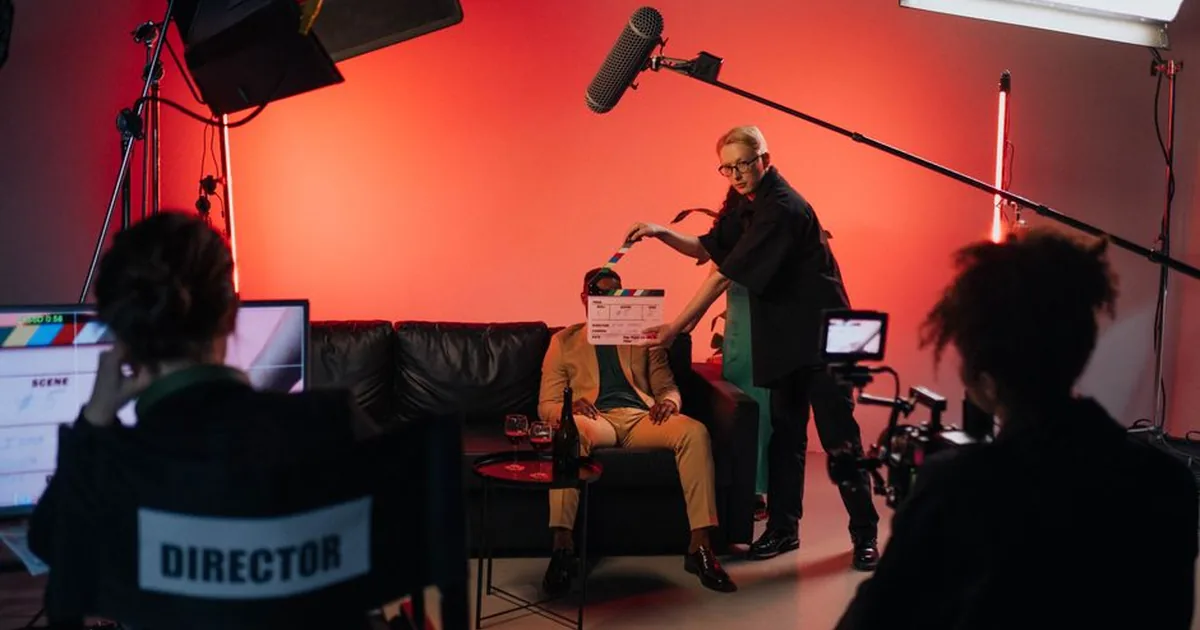
Working With a Non-Actor Lead
The first time we handed a non-actor lead a conventional note — find your objective in this scene — it landed as noise. Not resistance. Just a blank look. She'd never taken an acting class, had no frame for the word "objective," and stood there waiting for direction that actually meant something. We'd built the note for a vocabulary she'd never been taught, on a set that assumed she had.
That's the situation worth naming: a documentary subject, someone a producer met on a location scout, a lead cast off the street because the role calls for someone who has actually lived the part rather than performed an approximation of it. Barry Jenkins cast much of Moonlight this way, visiting a Miami community center repeatedly over more than a year before a camera ever came out. He wasn't looking for someone who could "act." He was looking for someone who could be truthful in front of a lens. When that's the casting logic, the directing logic that follows has to change too.
What We Noticed
The vocabulary breaks first. Acting-class terms — objective, motivation, stakes — assume a performer has already translated real feeling into technical language once before. A non-actor hasn't made that translation, and asking them to do it live, on a schedule, just adds a second job on top of the one they're already struggling with: being watched by thirty people while trying to feel something real. Physical, sensory direction works better. Tempo. Where you're looking. What you're carrying. How fast you walk into the room. None of it requires the performer to already speak a language we invented for people who went to drama school. Varying the note itself when one approach isn't landing matters more with a non-actor than with a trained one — a trained actor can translate a note that misses on the first try; a first-timer usually can't.
The casting relationship is where the performance actually starts. By the time we're on set, the trust that lets someone risk something real on camera was either built during casting or it wasn't. There's no fixing it on the day. It's the same blind spot we've written about before: a writer-director's own footage is hard to see clearly from inside it, and a first-time performer watching themselves back is caught in the same trap — just earlier in their career.
What We Changed or Kept
We kept the instinct to write the part closer to the performer's own life rather than ask them to act outside it. Lines that sound like something someone would actually say outperform lines that sound like dialogue. Writing the scene so a non-professional can be a version of themselves isn't a compromise. It's closer to what the role needed in the first place.
What we changed was the rehearsal budget. The schedule we'd have used for a trained lead didn't leave enough room, and rehearsal time is the real performance budget on a production like this — not the camera package, not the lighting kit. We also paired the non-actor lead with at least one trained performer in a scene-partner role, for the rhythm a scene needs that two first-timers together don't reliably produce on their own.
And we briefed the crew before day one, not after the first contradicted note. A script supervisor's correction or a producer's aside lands harder on someone with no prior experience absorbing conflicting direction. It's the same coaching instinct we lean on preparing a director for a festival Q&A, where the goal is steadying someone through an unfamiliar on-camera moment without flattening what makes them worth watching in the first place.
Working Note
What carries into the next shoot is easy to state and easy to forget under schedule pressure: casting is the first rehearsal, not a separate stage that happens before the real work starts. Directing a performance doesn't change based on whether the lead has a reel. It's the same craft question we return to on every film we take on.
Keep reading
More from the journal →