July 7, 2026 · 4 min read
Documentary Verité Ethics in the Editing Room
Verité's honesty was always framed as a camera question — hide it or show it. In practice the claim gets settled later, cut by cut, in decisions about pacing, sequence, and what gets left out.
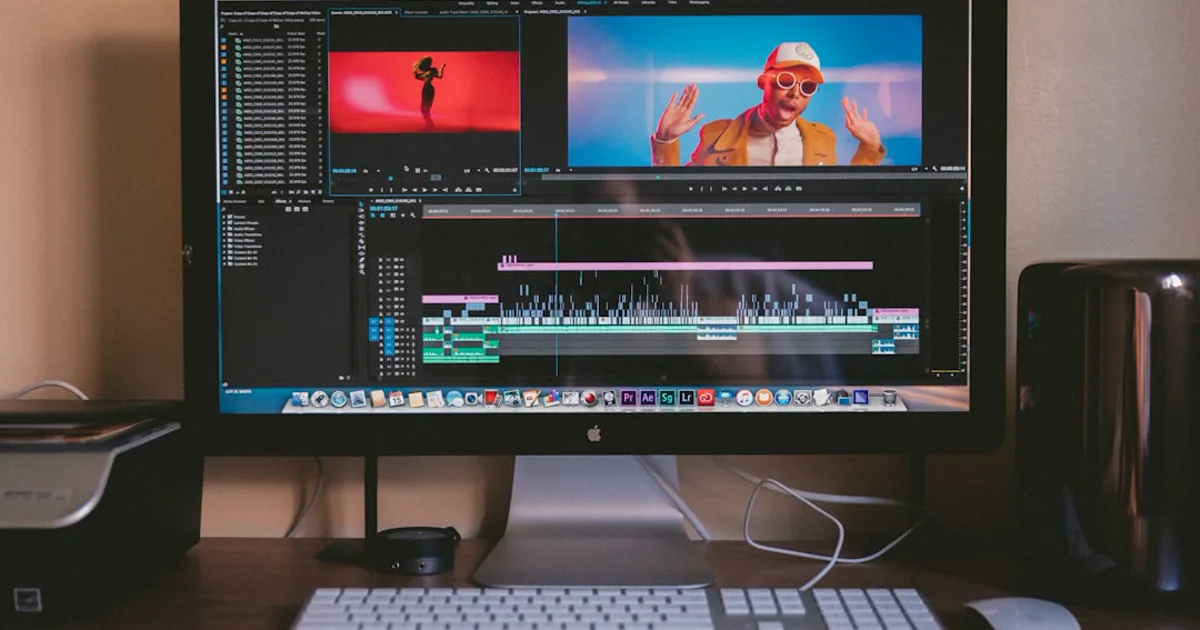
Verité's honesty was always sold as a camera question — hide it, and you get direct cinema's fly-on-the-wall claim; show it, and you get verité's argument that an acknowledged camera is the more honest instrument. Either way, the framing puts the ethics upstream, on set, before anyone's touched a timeline. That's not where it actually gets decided. It's not where we spend most of our own attention on a documentary project, either.
Documentary verité editing ethics live in the cut. Every claim a verité film makes about truth gets ratified or broken later, in an edit bay, by a person choosing what precedes what, what runs long, and what never makes the reel. A subject can be filmed with total honesty and still end up misrepresented three cuts later, once sequence and juxtaposition start doing their quiet work. This is a working note about that room — not the shoot.
What the Camera Never Decided
The visible-camera premise
Cinéma vérité, the style Edgar Morin and Jean Rouch developed out of Dziga Vertov's kino-pravda, made a specific bet: an acknowledged camera reveals more than a hidden one. Rouch and Morin's subjects knew they were being filmed, and the films argued that this visibility — not concealment — was what got you closer to something true. On the other side of the same decade, direct cinema made the opposite bet, developing in parallel in Quebec and the U.S.: minimal intervention, an unobtrusive crew, real life captured without anyone accosting a subject on the street.
The editing counter-claim
Both bets have the same blind spot. As critics of direct cinema pointed out, if a film is a production of signs at all, the idea of pure non-intervention is a kind of mystification — the footage still has to be assembled into sequence, and assembly is where meaning actually gets made. We feel this every time we're in the room: two verité scenes shot with total observational restraint can be cut into three different arguments depending on what precedes them. The camera's posture on set doesn't settle that. It's a question we sit with constantly, including where we draw that line in our own edit bay between assistance and editorial judgment.
Whose Cut Is It, Anyway
Schedule as an ethical variable
A rushed cut is usually described as a budget problem. The Alliance of Documentary Editors' scheduling guide reframes it correctly: as an ethics problem. Roughly a month of edit time per ten minutes of finished runtime — six months for an hour, nine for a feature — isn't a luxury ask. It's the minimum time a documentary editor needs to actually weigh competing sequences rather than default to the first assembly that plays. Underneath the benchmark sits a bigger claim: editors are core creative authors, not late-stage technicians, and the ethical work happens in the room, on a schedule, under real constraints.
Subject involvement in the room
Not every film handles this the same way. Some productions keep subjects out of the edit entirely, protecting creative control. Others treat involvement as the only honest option for material this personal — Laura Poitras cut "All the Beauty and the Bloodshed" in collaboration with her subject, Nan Goldin, arguing that Goldin's own history of photographing people who retained agency in the frame demanded the same agency in the edit. It's a different problem than a director who can't watch their own footage, but it's the same room, and the same question of who gets a vote in what the film finally says.
The Ethics of What You Leave Out
Constraint as an editorial device
Structural limits can do ethical work that intention alone can't. Tim Fehlbaum's decision to confine "September 5" almost entirely to a control room — a choice he traced back to the spatial discipline of "United 93" — forced deliberate calls about what to show and what to withhold rather than defaulting to comprehensive coverage. Restraint, in that case, wasn't a stylistic flourish. It was the mechanism that kept the film from becoming the thing it was examining — a live crisis turned into spectacle for an audience watching it unfold in real time alongside the people living through it.
The editor as author
That's the throughline: the room decides. Documentary editors increasingly get credited, correctly, as writers of the film rather than assemblers of pre-existing truth. The same pressure to show everything versus show what earns its place shows up constantly in our own work — the same pressure shows up in archive licensing, where what you're legally allowed to include and what you should include are two separate arguments happening in the same cut.
A Working Note
Verité's truth claim was never really a camera-placement argument, even though it's usually taught that way. It's decided later — in what runs first, what gets trimmed, whose testimony survives to picture lock. That's true whether or not a project calls itself verité. Every edit bay carries this weight, and it's part of why we treat the cutting room, not the shoot, as the place where a documentary's honesty actually gets made or lost — the same standard we hold ourselves to on every film that comes through the studio.
Keep reading
More from the journal →