July 6, 2026 · 4 min read
Why Archive Licensing Is the Hardest Part of a Documentary Now
The hardest problem on an archival-heavy documentary now rarely lives in the edit bay. It lives in the rights chain behind every clip — and it fails the same way a schedule or a budget fails when it's treated as an afterthought.
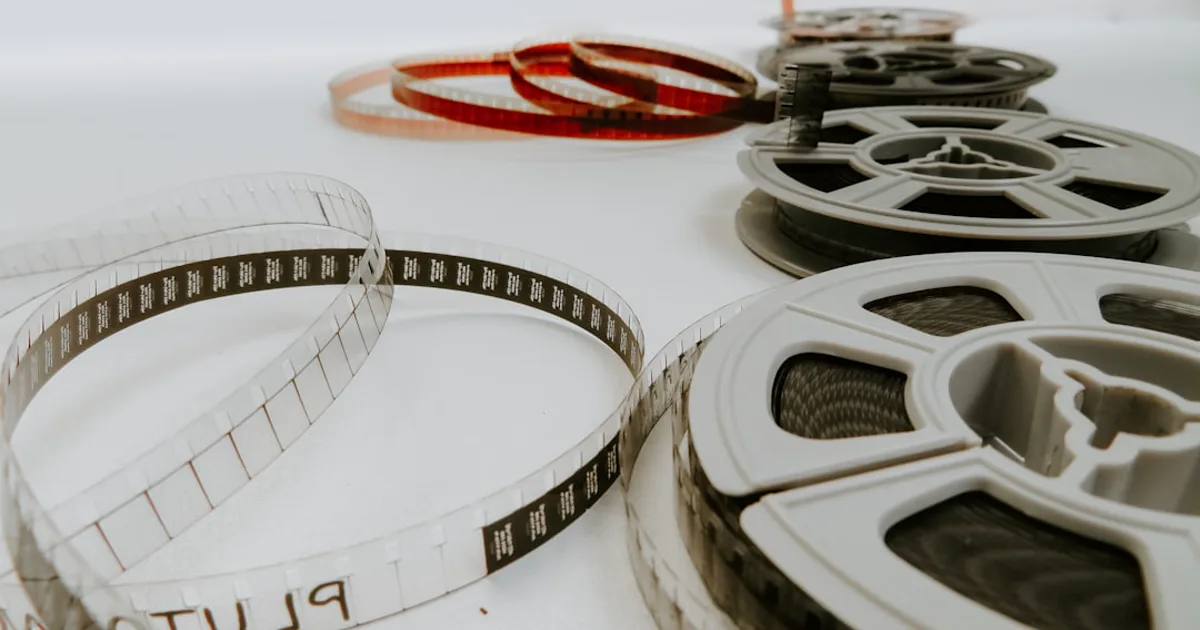
The hardest problem on an archival-heavy documentary now rarely lives in the edit bay. It lives in the rights chain behind every clip. A researcher pulls a piece of news footage off the open web on a Tuesday afternoon because the scene needs it. An assistant editor cuts it in as a placeholder. Eighteen months later, that same clip is the reason a festival cut can't lock. Documentary archive licensing has always been part of the craft — what's changed is the shape of the problem. More platforms, more territories, and a rights math that no longer resembles the distribution math a production actually needs. Here's what we've learned about where that gap opens up, what happens when a rights chain lapses years after a film is finished, and where the footage nobody can find in a search still comes from.
The Rights Math Doesn't Match the Distribution Math Anymore
Distribution used to mean a broadcast window, maybe a home video release behind it. Clear rights for that window, ship the film, done. That model doesn't hold anymore. A single documentary can need festival exhibition rights, U.S. broadcast rights, and worldwide all-media rights cleared before it even has a distributor attached — and archives quote each of those tiers separately. A film that clears festival rights only, and waits to see what happens next, ends up renegotiating worldwide rights later — from a worse position, once a streamer is attached and the leverage has already shifted to the archive.
That's before accounting for what streaming distribution looks like now. Media companies distribute across an expanding roster of platforms and territories simultaneously rather than through one window followed by a second. Each additional platform and territory can carry its own rights math, so the permissions a production needs to track for a single piece of archival footage multiply well past what the old single-broadcast model ever required. The throughline we keep coming back to: quote every tier at the start. Not because it's tidy, but because the alternative is negotiating the same footage twice — the second time with no leverage at all.
It's the same instinct behind a long deliverable list at the festival stage: plan for the distribution path the film might take, not just the version of it sitting in front of you this week. New clearance tooling — software, AI-assisted rights tracking, early blockchain-based rights registries — is emerging precisely because the old method, a spreadsheet built by hand per source, doesn't scale to this math anymore.
What Happens When the Rights Lapse
The clearest illustration of what's at stake isn't a production story. It's what happened after one landmark documentary series was already finished. Eyes on the Prize was pulled from broadcast reruns and home video in the mid-1990s, not long after its original release, because the copyright holders behind its archival footage and music demanded renewal rates the production couldn't meet. The series was effectively gone — unavailable to broadcasters, to educators, to home viewers — for about eleven years.
The fix, when it came in 2005, wasn't creative. It was procedural, and it was expensive: grants from the Ford Foundation and the Gilder Foundation funded a dedicated relicensing effort to renegotiate the entire rights chain from scratch, staffed by legal counsel, an archivist working as rights coordinator, and a music supervisor. Not one frame of archival material was altered or removed in that process. The series was restored intact, and that's the part worth sitting with: the problem was never the footage. It was always the paper underneath it.
The takeaway isn't really about Eyes on the Prize specifically. It's that the same three roles that rescued a lapsed archival film are the ones any archival-heavy production should be staffing before the rights ever lapse, not after.
Where the Footage Actually Comes From
Some of the licensing workload is just logistics. On one archival-heavy production, a co-producer tracked hundreds of individual sources across dozens of different formats, each with its own delivery spec and its own rights holder to negotiate with separately. Government archives like the U.S. National Archives carry no underlying license fee, only a transfer cost — a real, source-by-source tradeoff against paid commercial stock libraries. Slower and free, versus faster and billed.
A meaningful share of the strongest material was never digitized or indexed anywhere a web search would find it. Local news film, home movies, footage held by regional archives and private collectors — archival researchers with existing relationships to those collections still earn their fee in a search-engine era, precisely because that material doesn't surface any other way. Rights status on older or orphaned footage is often genuinely unclear, and that's where how we think about AI in the edit matters too. The tools can help track a chain of ownership across scattered sources, but they don't replace a documented, good-faith clearance process — which is what an errors-and-omissions insurer wants to see before a film can secure distribution.
Archival licensing isn't paperwork bolted onto the craft. It's a production discipline with its own schedule, and it fails the way a budget or a shooting schedule fails when it's treated as an afterthought instead of a line item from day one. The tooling around chain-of-title keeps improving, but nothing yet replaces clearing broadly and early. It's the same logic we bring to a music spotting session on the sound and music side of the studio: the rights conversation for a cue happens before the cut is locked, not after. A scene built around a piece of music or footage you don't yet own isn't a finished scene. It's a liability with a temp track.
Keep reading
More from the journal →