July 19, 2026 · 4 min read
How We Approach Archive Material in a Documentary
A reel with no clean provenance, a frame that can't be re-shot — every documentary edit eventually asks what archive is doing in the cut. We walk through how we source it, credit it, and know when to leave it out.
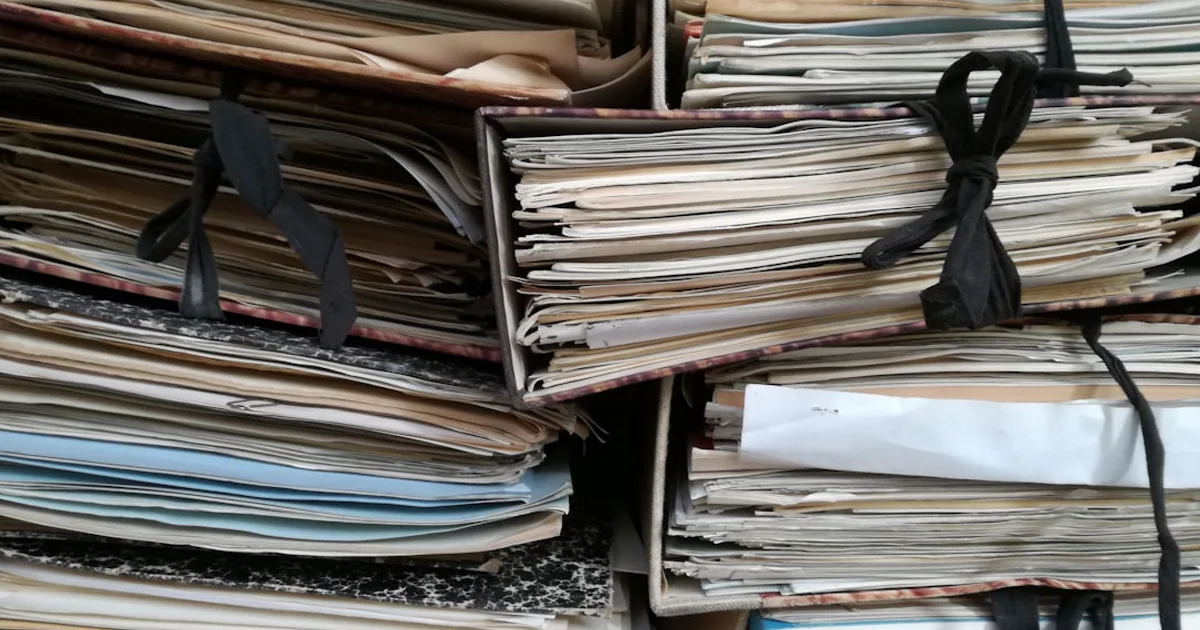
A reel of footage arrives with no clean chain of custody — a label, maybe a date, nothing else. Or the cut needs an image of something that no longer exists to be filmed: a demolished building, a person who has since passed, a moment that only survives on somebody else's tape. Archive is never a neutral fix for a gap in coverage. It's a decision about whose record we're borrowing, and what we owe it in return.
We treat every piece of archive the same way we'd treat an interview subject: it comes from somewhere, it means something to someone, and it deserves an accounting before it goes in the timeline. Here's how we sort through that — what counts as archive, what the sourcing actually costs in time and money, and where restoring an old frame turns into inventing a new one.
What Counts as the Archive
Institutional, found, and living-subject footage
Archive covers more ground than the word suggests. Licensed institutional material — a news library, a studio vault — has clean provenance and a cost that's mostly the invoice. Found or amateur footage, home movies and unlabeled reels, works differently: the subjectivity of an untrained camera becomes part of the story rather than a flaw to correct for. Footage of people who are still alive is its own conversation entirely, closer to an interview release than a licensing fee. Archival, or stock footage, is material obtained from a film library or archive and inserted into a documentary to show historical events or add detail without the need for additional filming — useful shorthand, but it undersells how differently those three sources behave once they're actually in an edit.
Two ways in
Broadly, a documentary arrives at its archive one of two ways: the story is found inside an existing archive, or the archive is sourced to support a story already chosen. The first is discovery — the footage tells you what the film is about. The second is illustration — you know the argument and go looking for material that proves it. Both are legitimate. But they produce different films, so we name which one we're doing before the search starts. It changes how skeptical we stay about the first clip that fits.
Whose Story Is It Once We Cut In
The practical grind behind the ethics
Sourcing archive is a tracking problem before it's a creative one. Every clip needs to carry its provenance forward — which archive it came from, its reference number, what rights were actually granted — because every archive has its own process, pricing varies widely, and there's usually only one or two chances to get a request right before costs escalate. Public institutional archives are worth checking early for exactly this reason — the material itself can be free, even when the transfer isn't, and it's a meaningful hedge against a budget that archive fees can quietly consume. This is the licensing side of this we've written about before, and it hasn't gotten simpler.
Re-appropriation carries responsibility
None of that paperwork is the point, though — it's the mechanism for a more basic obligation. Using someone else's footage is a form of re-appropriation, and it comes with real editorial weight. Documentary ethics asks a filmmaker to be transparent about their own positionality and to respect the dignity and agency of the people who appear in the film — including people who never agreed to be in ours specifically, only in whatever they were filmed for originally. That's the same ethics we hold to in the room when we're cutting our own footage. Archive shouldn't get a lower bar just because the camera wasn't ours.
Restoration Is Not the Same as Fabrication
Where the line actually sits
Cleaning up a scratched frame or stabilizing a shaky reel is restoration — standard, uncontroversial craft. Generating a new frame that looks archival but never existed is something else, and the distinction matters more now than it used to. The Archival Producers Alliance, representing roughly 300 documentary professionals, has been explicit that generative tools risk forever muddying the historical record with synthetic material indistinguishable from authentic sources, and that restoration and enhancement remain acceptable while fabricating new "archival-looking" material does not. Disclosure runs the whole chain when AI touches a frame at all — internally to the team, to legal, to the subject if there is one, and eventually to the audience. That's roughly where we've drawn that line before on the editing side generally. Archive is if anything a stricter case, because the entire value of the material is that it's real.
Working note
The rule we actually apply is plainer than any of the above: if we can't say where a frame came from, it doesn't go in the cut. That's a picture-editing discipline as much as a legal one — provenance is part of the composition, not paperwork bolted on afterward. It's also, in a smaller way, the same instinct that shapes how we approach film generally at the studio: the material has to be able to answer for itself before it earns a place in the story.
Keep reading
More from the journal →